Peer-to-Peer Energy Exchange Optimization
A non-cooperative game-theory method for building-to-building grid energy exchange, optimising welfare through strategic pricing and ESS degradation-aware trading.
Building-to-Building Grid Energy Exchange
This research presents a non-cooperative game-theory method to optimise energy exchange within a building-to-building (B2B) grid. Each building with PV generation and energy storage strategically determines its energy trading decisions — including pricing — to maximise individual welfare while reducing reliance on the main grid.
System Architecture
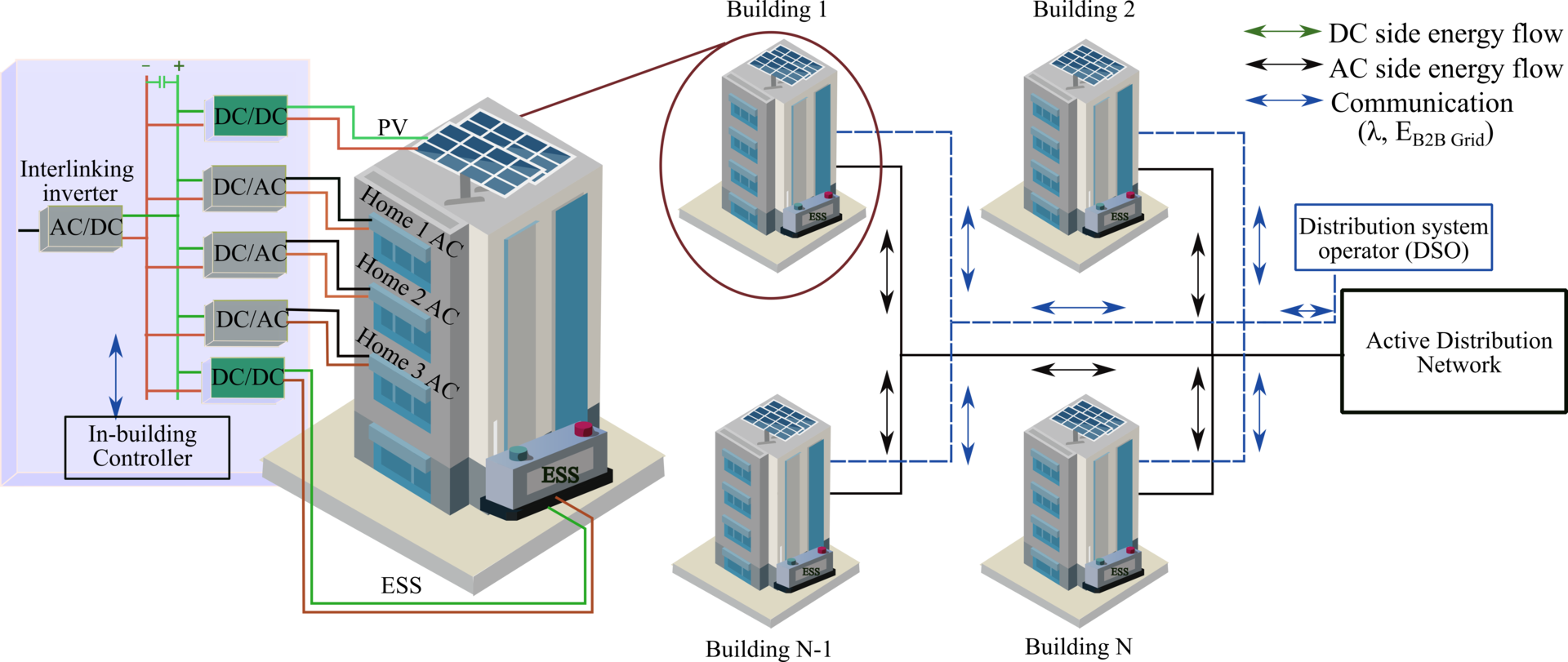
The proposed system connects buildings through a Virtual Synchronous Generator (VSG) based controlled DC/AC interlinking inverter. Each building is equipped with in-building PV generation, ESS connected via DC/DC converter, and internal loads. The VSG control allows buildings to seamlessly participate in inertia support of the B2B grid network — a key differentiator for grid stability.
Building Classification
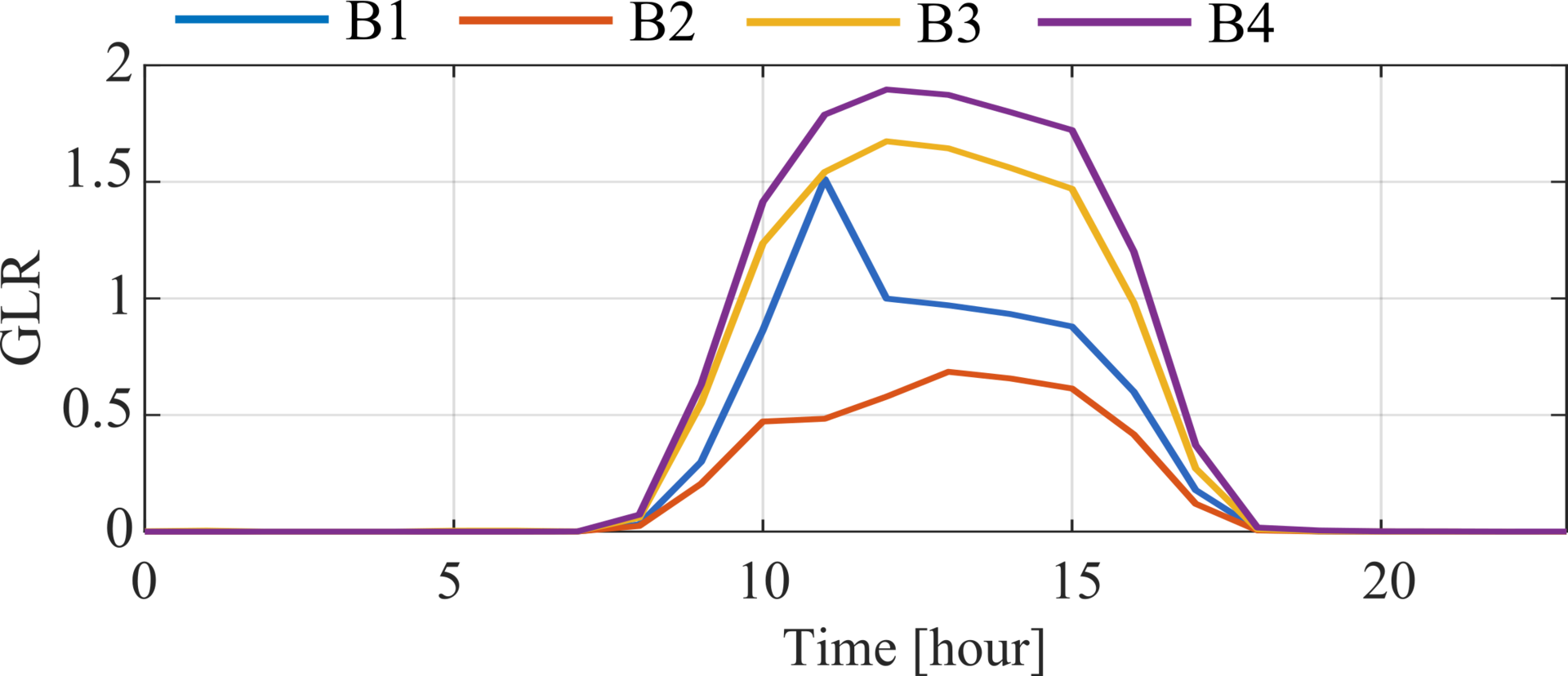
At each time step, buildings are classified as buyers or sellers based on their Generation-to-Load Ratio (GLR). Buildings with GLR > 1 become sellers, while buildings with GLR < 1 become buyers. The grid and ESS can also participate as sellers or buyers depending on preference and state of charge.
Game Theory Optimization Model
The energy exchange is formulated as a non-cooperative Stackelberg game. Sellers announce prices and available energy; buyers select sellers and quantities to maximise their welfare function. Through iterative negotiation, the market reaches equilibrium where all participants benefit compared to grid-only operation.
Welfare Function & ESS Degradation
Each building's objective is to maximise a welfare function balancing utility from energy consumption against costs from B2B trading, grid imports, and ESS degradation. The utility function is quadratic and concave, ensuring satisfaction saturates when demand is fully supplied. ESS degradation cost — combining calendar and cyclic aging via rain-flow counting — is explicitly modelled, making this uniquely realistic among peer-to-peer trading approaches.
Energy Exchange Simulation
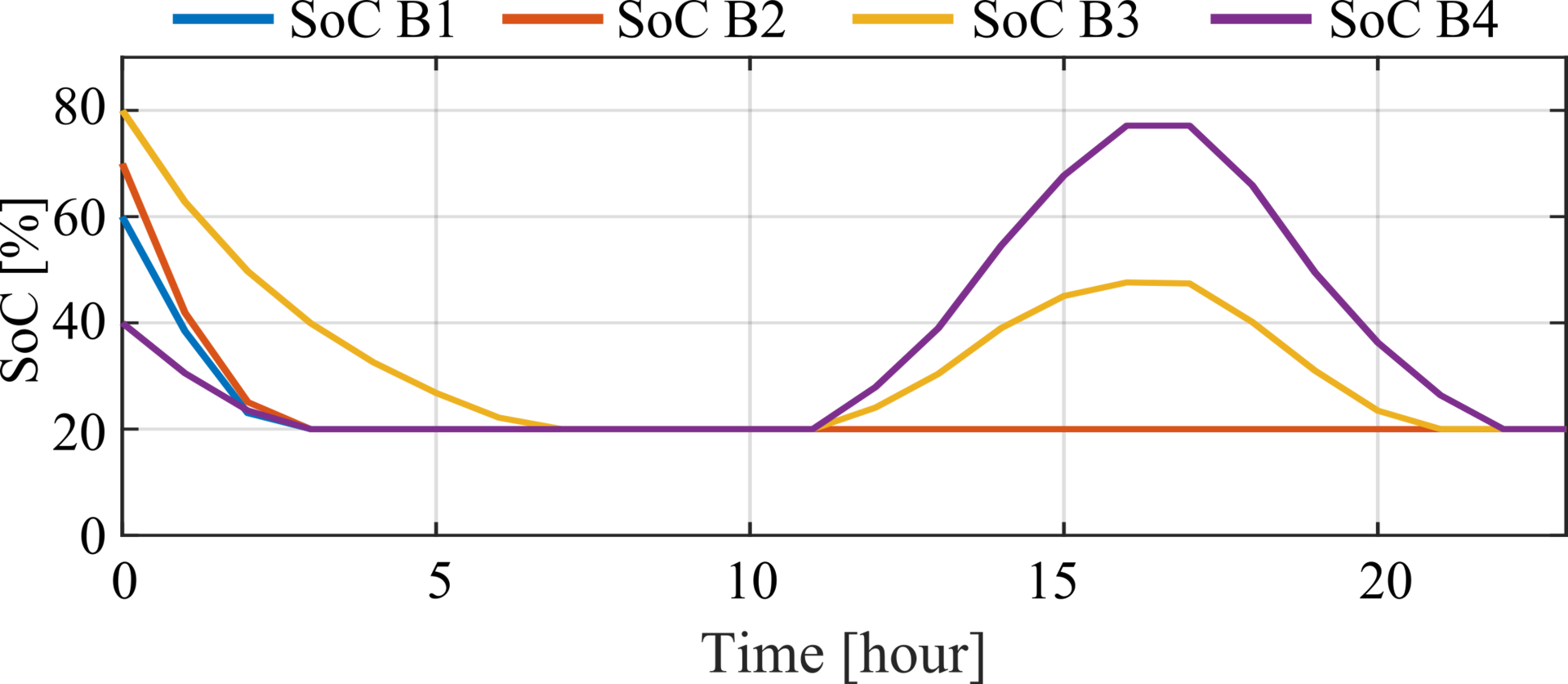
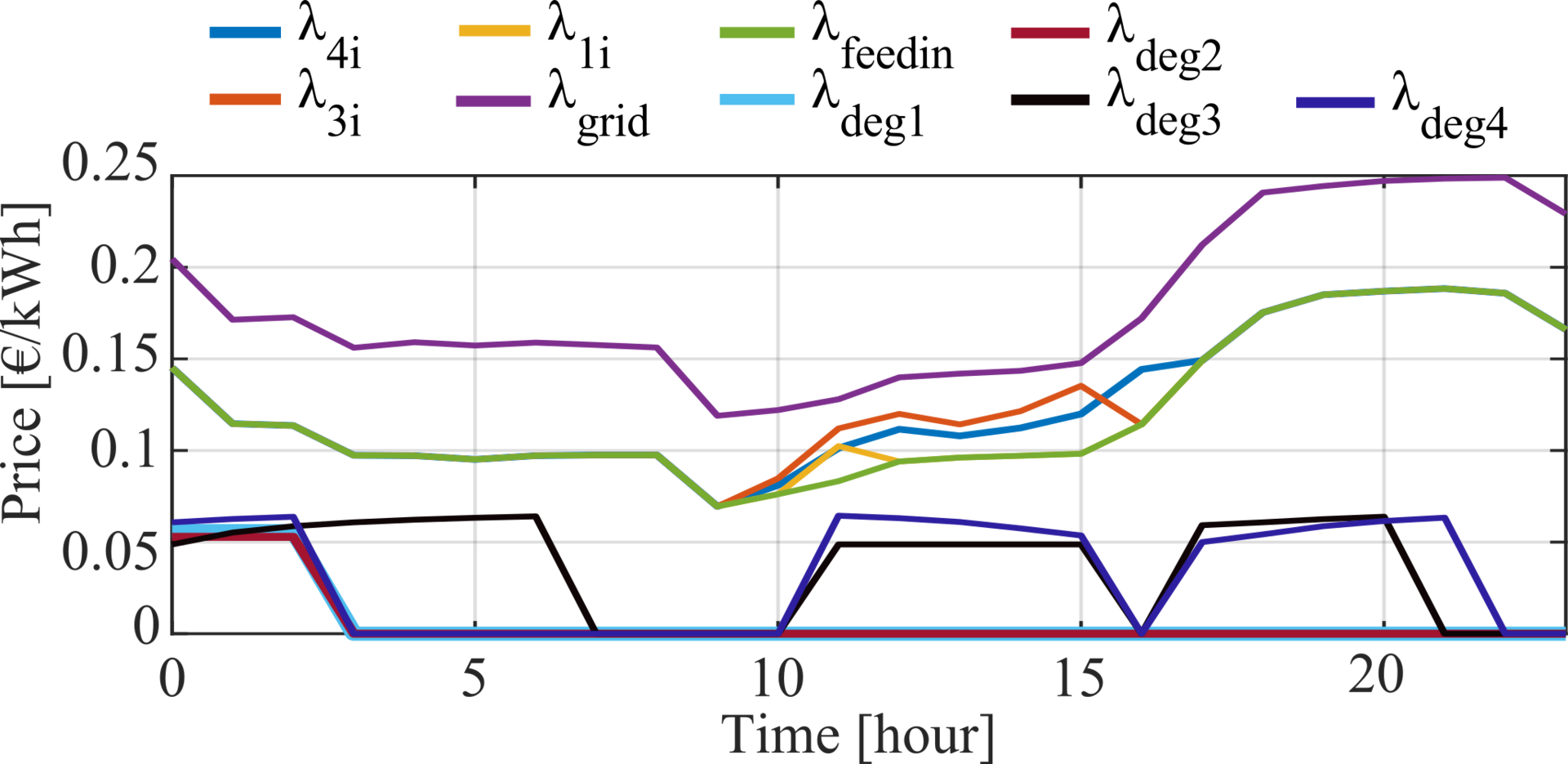
Results & Cost Savings
The proposed B2B grid with ESS (considering degradation cost) is compared against building-to-grid (B2Grid) alternatives. Three cases are analysed: B2B without ESS, B2B with ESS (ideal), and B2B with ESS including degradation cost.
Key Performance Metrics
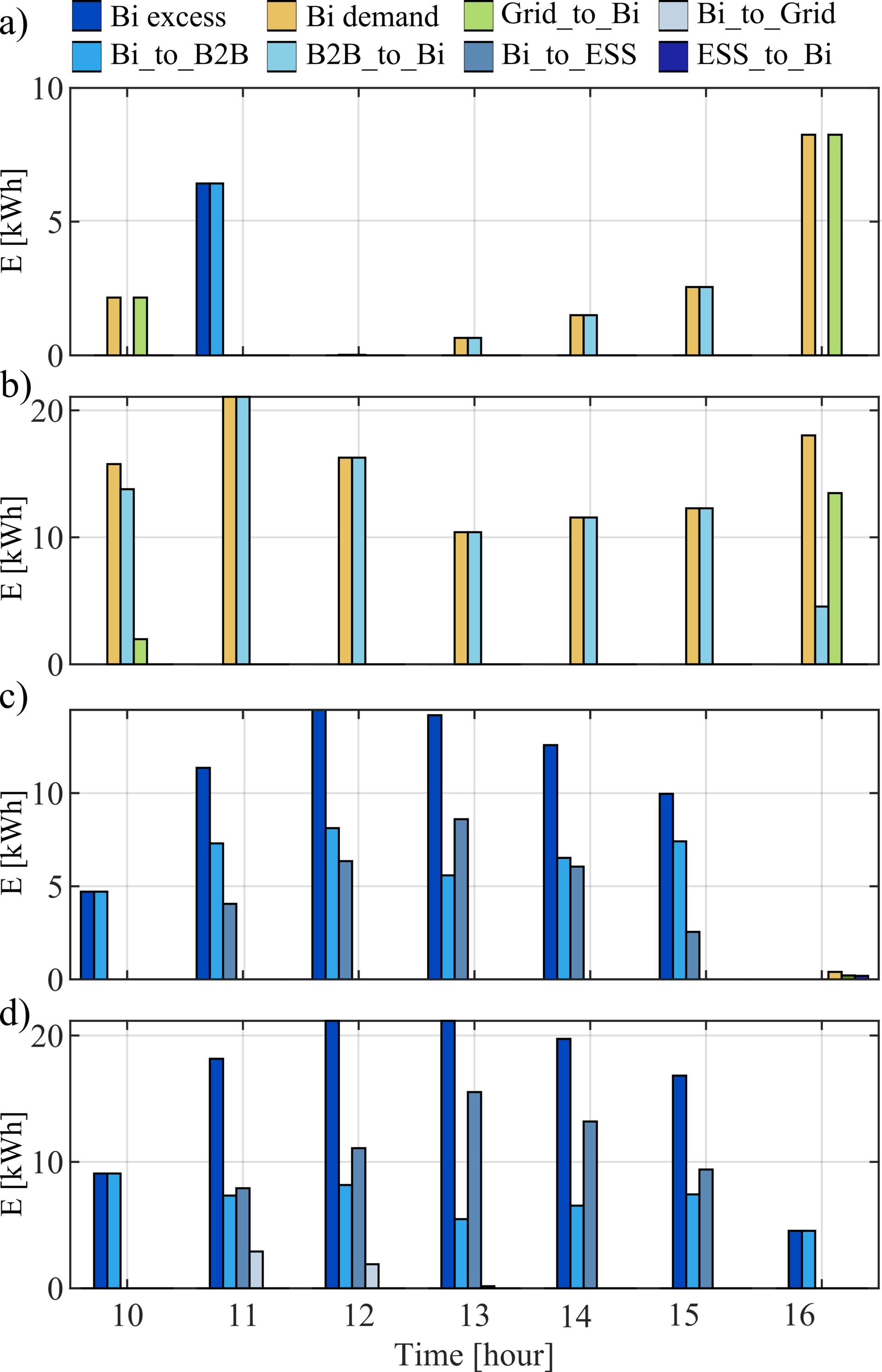
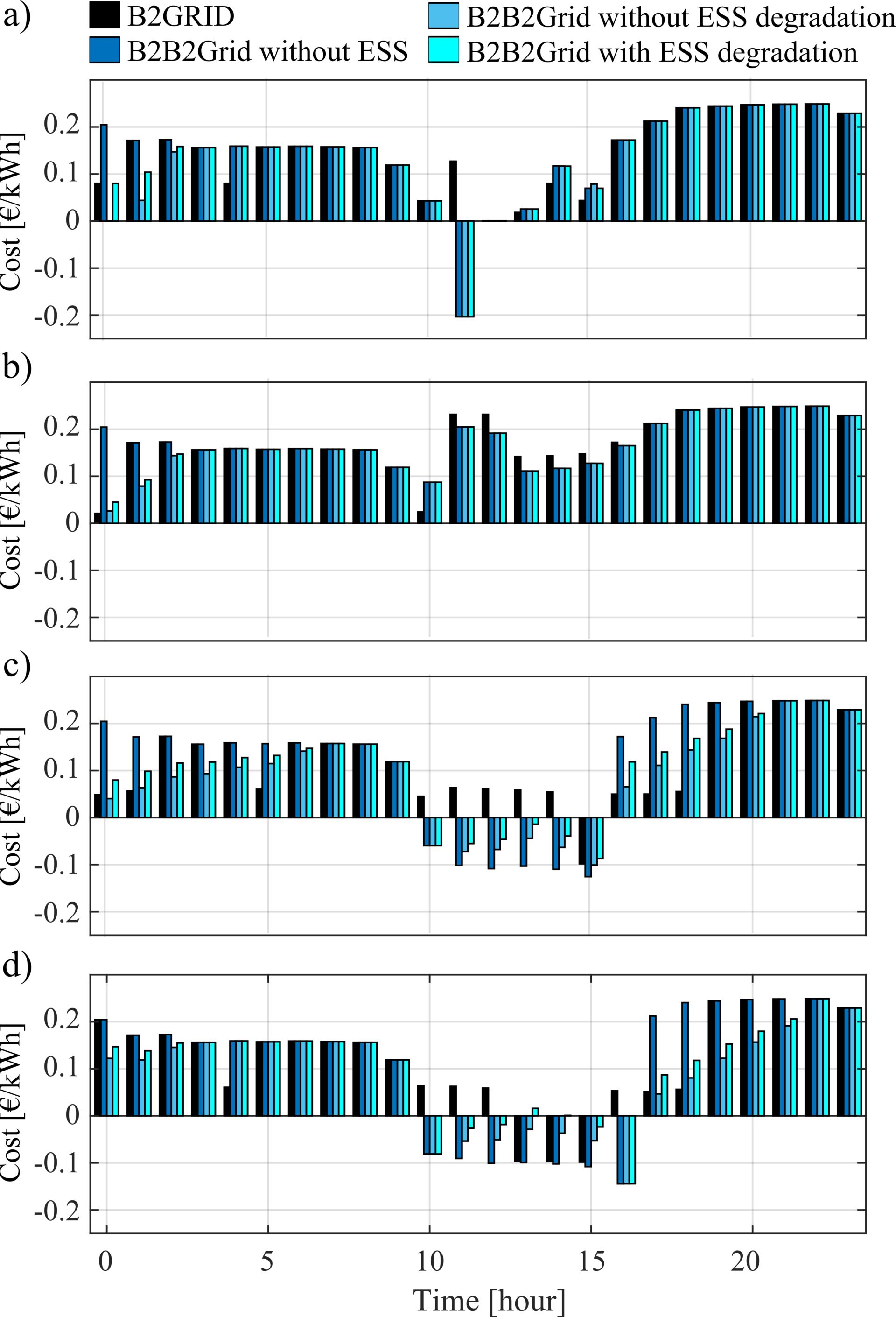
Real-World Validation: Barcelona Pilot
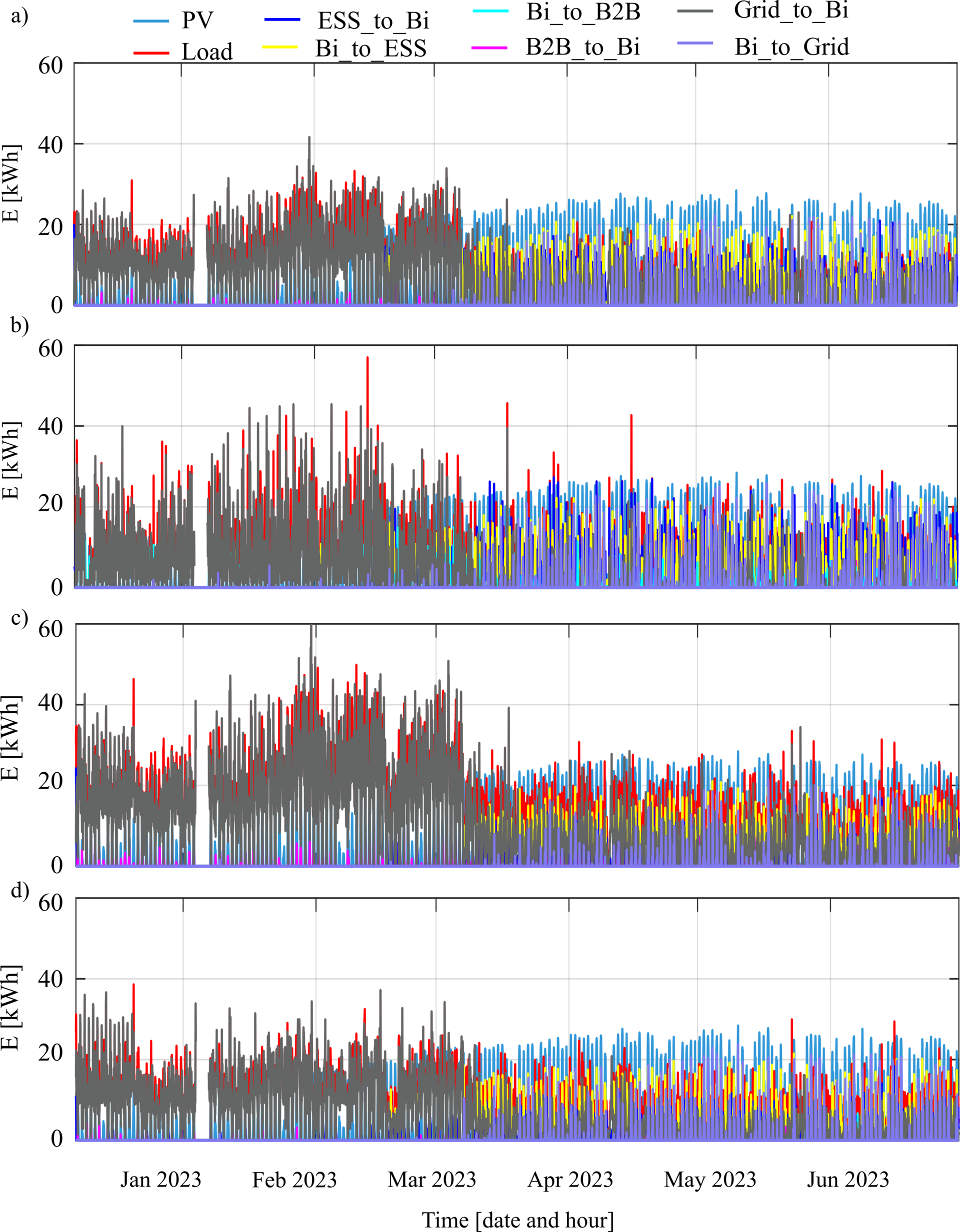
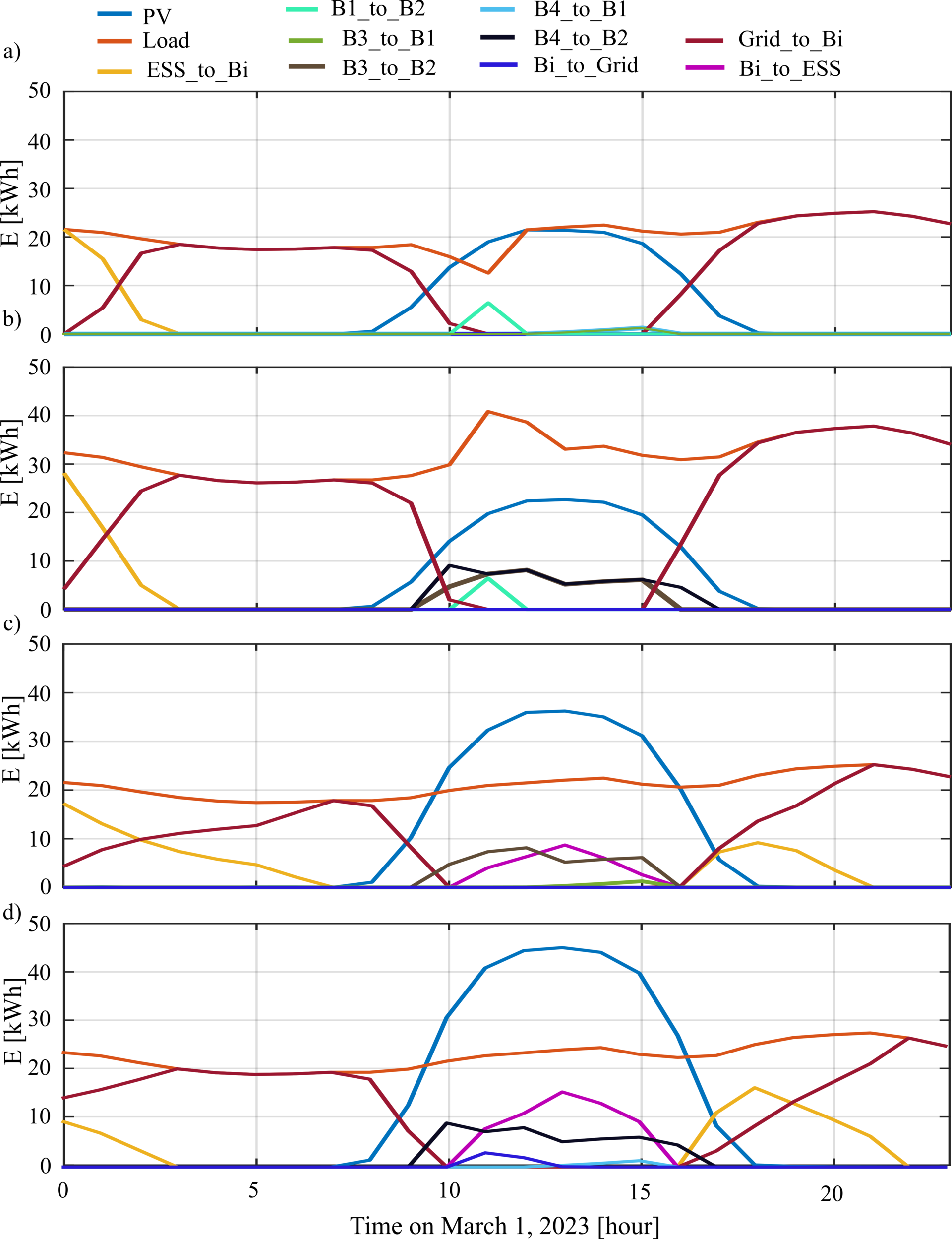
The system was validated using seven months of smart meter data from four interconnected buildings in Barcelona. The hourly energy exchange simulation confirms the model's ability to optimise real-world trading under actual market conditions, with savings ranging from €73 to €567 per building.